Harvard Science Center
Location
Cambridge, MA
Completed
2025
Size
30,000 SF
Owners
Harvard University
Architect
Leers Weinzapfel Associates Architects
Photographer
© Albert Vecerka/ESTO
Certifications
LEED Gold
Design Team
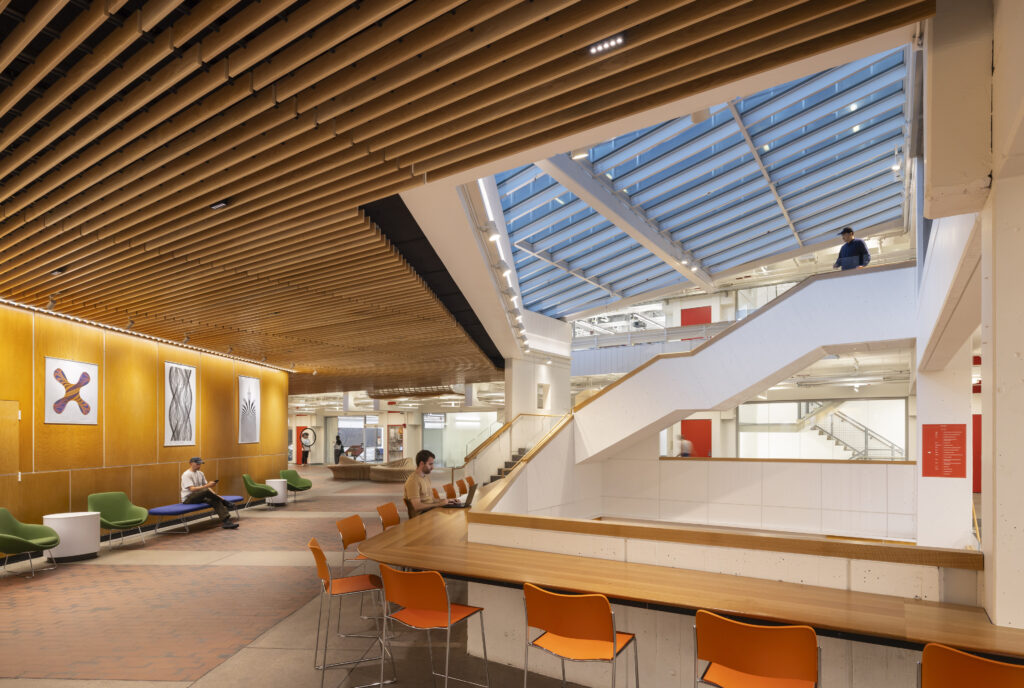
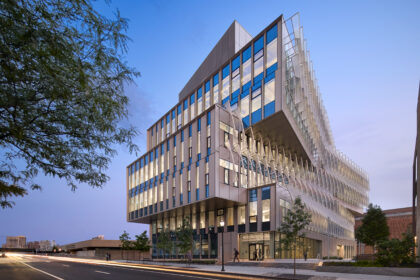
The Harvard Science Center, designed by Josep Lluís Sert, has been a prominent campus icon since 1973. As one of the first buildings to depart from traditional Georgian architecture, it embodies the modernist ethos of exposing and organizing building systems typically concealed, making it a living, breathing structure. During the recent renovations, two methodologies shaped the lighting design: one allowed selected architectural materials to “speak” by concealing the light sources, while the other expressed lighting hardware as part of the building’s original ideology of putting systems on display.
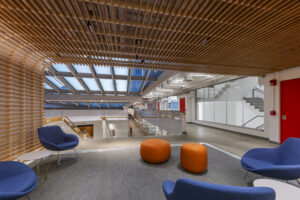
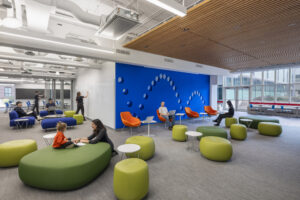
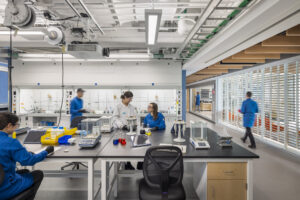
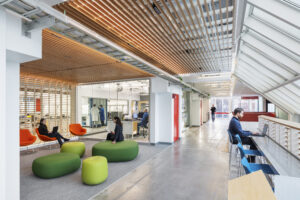
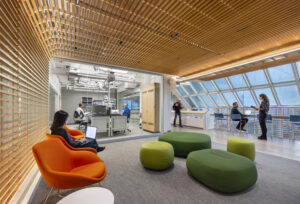
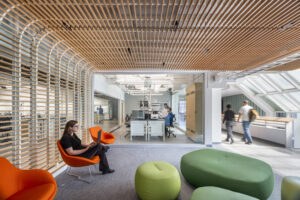
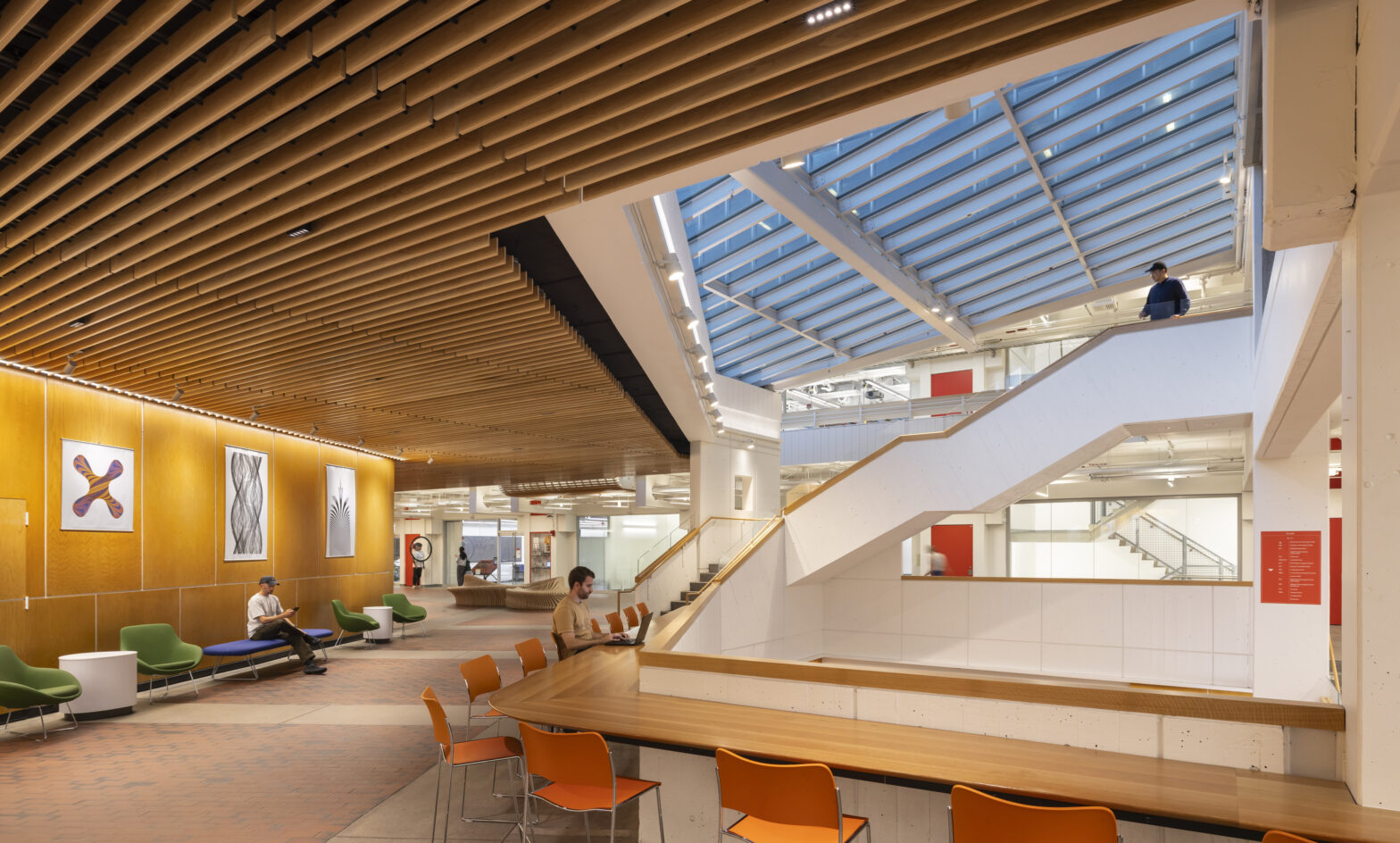
To bring the scale down in the lobby and lounges, wooden slats wrap the ceilings to create a warm scrim that hides the mechanical layer above. Lighting is concealed within architectural details, and downlights with glare-control louvers blend into the ceiling so that only the texture and warmth of the wood is perceived—not the light source itself. The architecture is revealed through the “silence” of light. In labs, classrooms, and offices, the renovation maintains the original intent of showcasing infrastructure, with exposed direct-indirect fixtures, wall washers, and monopoints forming a cohesive ceiling datum. Rather than hiding the mechanical layer, the ceilings are upllit and celebrated, reinforcing brightness throughout the teaching and research spaces.
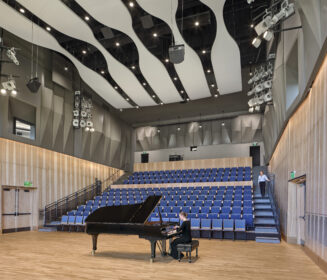
Because much of the original structure remained intact, the challenge lay in carefully coordinating the lighting without interfering with historic elements or mechanical systems. A multidisciplinary approach ensured a harmonious dialogue between architecture, infrastructure, and light.