Studying Light with Camera Obscuras
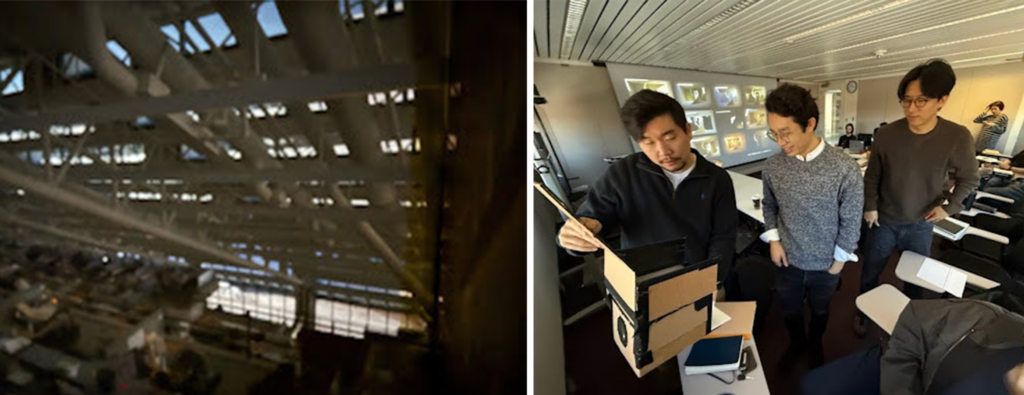
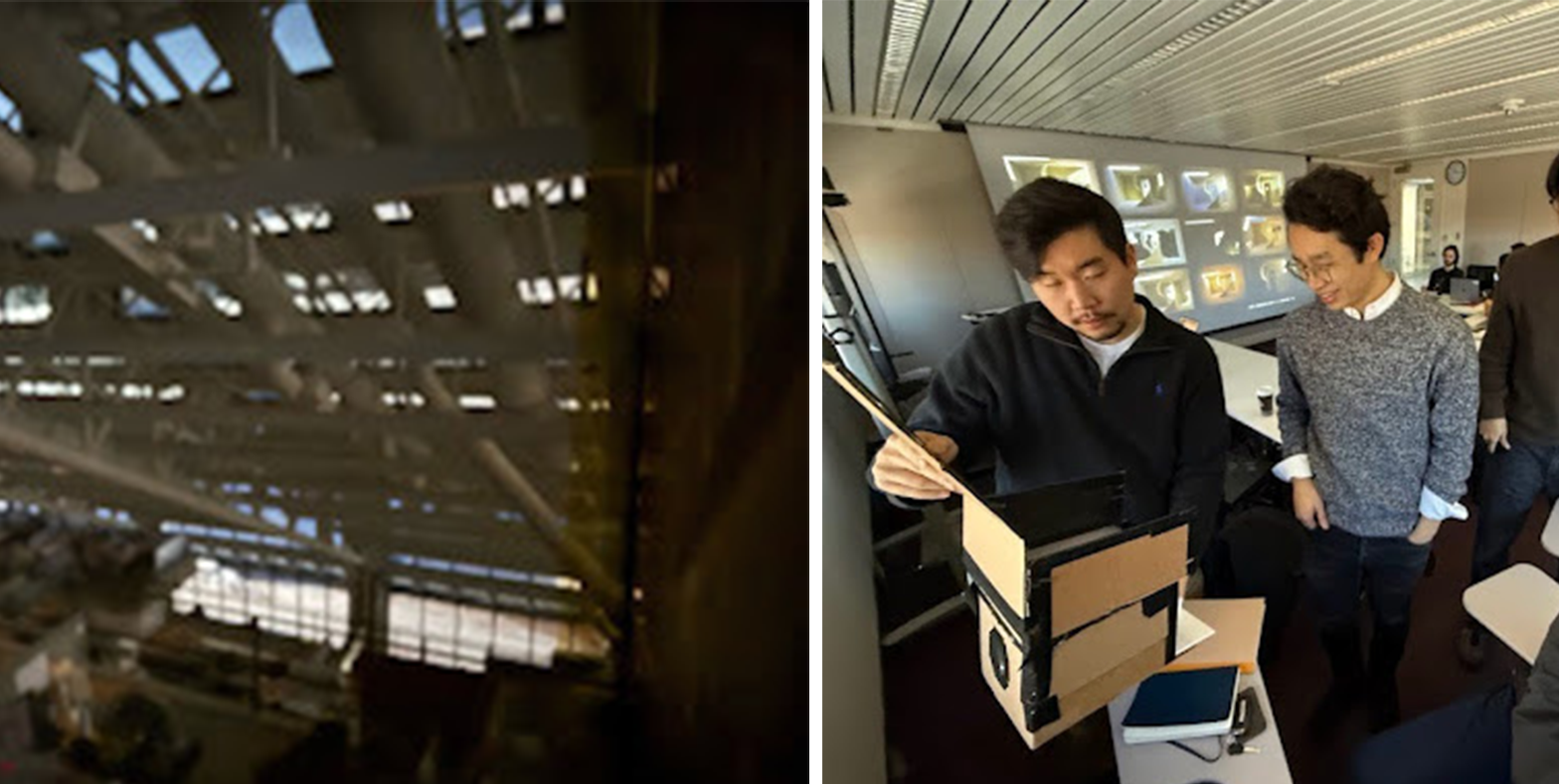
Today, lighting design is overwhelmingly conceived, evaluated, and communicated through images. From early photography to contemporary digital rendering, the image increasingly precedes the space it claims to represent, shaping design intent before construction. In Lam Labs, our ongoing exploration of light has recently taken a hands-on approach with the construction of a series of Camera Obscuras, or ‘Dark Chambers.’ These boxes have served as a direct and visceral means to capture and study the fundamental qualities of light—how it enters a space, how it behaves, and how it can shape perception.
Furthering this investigation into the physics and phenomenology of light, Dan Weissman, Director of Lam Labs, is currently teaching a project-based seminar at the Harvard Graduate School of Design (GSD). The course, Modeling Light, involves a range of lighting experiments that began with the construction of functional Camera Obscuras, intended to immerse students in the fundamental principles of light and optics, and as an instrument for ‘tuning’ their vision. Students are now tasked with translating the conceptual and spatial understanding gained from the Camera Obscuras into daylighting models, evolving the enclosed, light-capturing chamber into an open, light-modulating architectural model, effectively bridging the historical tool of observation with contemporary architectural design practice. Through the rest of the semester, students will translate these physical box constructions into digital simulations, comparing the real with the simulated so as to build intuition around the qualitative and quantitative aspects of light in architecture.